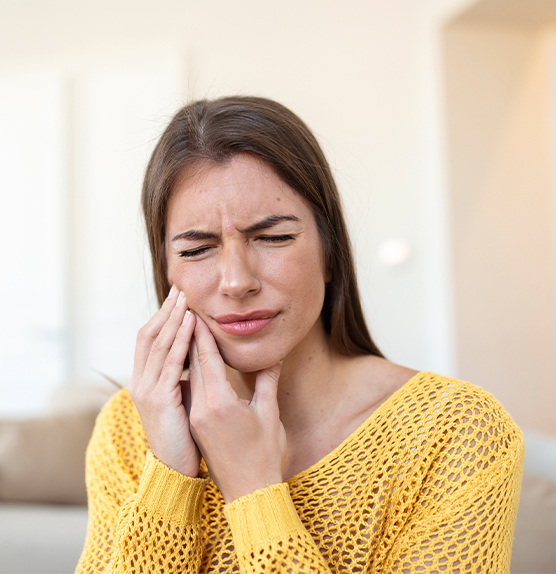
Does your jaw ache when you chew, click when you open your mouth, or feel tight when you wake up? Many people in Sharjah live with these symptoms for months before getting them checked. They can be signs of a problem with your temporomandibular joint (TMJ), the hinge that connects your lower jaw to your skull. Problems with this joint and the muscles around it are called temporomandibular disorders (TMD), often shortened to TMJ disorder. The good news is that most cases improve with simple, conservative care.
What is the TMJ?
You have two TMJs, one just in front of each ear. They let your jaw open, close and slide from side to side when you talk, chew and yawn. A small disc of cartilage cushions each joint. When the joint, the disc or the chewing muscles become strained or inflamed, pain and restricted movement can follow.
Common TMD symptoms
A clicking jaw on its own, without pain or limited movement, is common and does not always need treatment.
Can TMJ disorder cause headaches?
TMD can contribute to headaches, usually felt around the temples, and these are often linked to clenching or grinding that overworks the jaw muscles. However, frequent headaches have many possible causes, including tension-type headaches, migraine, sinus problems, eye strain, poor sleep and dehydration. A headache alone does not mean you have a jaw problem. A proper assessment by a dentist, and by your doctor where needed, helps find the real cause.
Seek urgent medical care for a sudden, severe headache, or a headache with fever, weakness, numbness, vision changes or confusion.
What causes TMJ disorder?
There is often no single cause. Common contributing factors include:
Daily routines in Sharjah can add to the strain. Long commutes, hours at a desk or on a phone, and work pressure can all lead to clenching your teeth without realising it.
TMJ disorder treatment options
Treatment depends on the cause and severity, and usually starts with the simplest options:
Surgery is rarely needed and is considered only when other treatments have not helped.
When should you see a dentist?
Book an assessment if jaw pain lasts more than two weeks, your jaw locks open or closed, chewing becomes difficult, or symptoms are affecting your sleep or daily life.
What to expect at a TMJ assessment
Your visit starts with a discussion of your symptoms. Your dentist will check how your jaw opens and moves, listen for joint sounds, feel the chewing muscles for tenderness and look at how your teeth meet. X-rays may be recommended if needed. If another cause seems more likely, such as a sinus or medical problem, you will be advised to see the right specialist.
TMJ disorder treatment in Sharjah
At Dr. Shiyas Dental Center in Al Abar, Halwan, our team helps patients across Sharjah with jaw pain, clicking and related symptoms. We are open seven days a week. Our dentists assess your symptoms, then recommend a treatment plan that suits you. Learn more about our TMJ disorder treatment or book an assessment today.
Author : Dr. Mohamed Shaahid Ahamed Basheer